

Transactional Funding for Texas Real Estate Deals
Real Estate, Loans
Transactional Funding Explained: How to Close Wholesale Deals in Texas With Zero of Your Own Money
We’re Michelle & Vin — “the money couple” out of San Antonio — and in this guide we’re breaking down exactly how transactional funding for wholesale real estate in Texas works, so you can close double closings with none of your own cash and still walk away with a solid assignment-sized profit.
You’ve Got a Killer Deal… and Exactly $0 to Close. Now What?
Picture this. You lock up a property in San Antonio at $165,000. ARV is around $260,000. You blast it out to your buyers list and a rehabber jumps on it at $185,000. Title is clean, everyone’s ready to close… and then the title company says: “We can’t do an assignment on this one. It needs to be a double close.”
Translation: you actually have to buy the property from the seller (A-to-B), then resell it to your end buyer (B-to-C). Same day, back-to-back. One small problem — you don’t have $165,000 sitting around. Most wholesalers don’t. That’s where we come in, and that’s exactly where transactional funding no money down real estate wholesale becomes your best friend instead of a deal-killer.
What Is Transactional Funding? (The “Flash Loan” of Real Estate)
In plain English, transactional funding is a super short-term loan — usually for just a few hours — that lets you buy a property so you can immediately resell it the same day. Think of it as a “flash loan” used strictly for double closings, not for rehabs or long holds.
With transactional funding for wholesale real estate in Texas, the lender fronts 100% of the purchase price (plus closing costs if needed) on your A-to-B closing. A few hours later, when your end buyer closes on the B-to-C side, the lender gets paid back out of your buyer’s funds — plus a small fee — and you keep the spread in the middle as profit. No monthly payments, no credit pull, no income docs. The key is you must have a real, committed end buyer already lined up.
How Does Transactional Funding Work for Double Closings? Step by Step
Let’s walk through how double closing transactional funding Texas 2024 typically plays out at the title company. We’ll keep it simple and real-world, the way we do with our own deals in San Antonio and across the state.
- Step 1 – You get the property under contract (A-to-B). You sign a purchase contract with the seller. This is your A-to-B contract. You’re the buyer, they’re the seller. Price, say, $165,000. You open title with a Texas investor-friendly title company that understands wholesaling and double closes.
- Step 2 – You secure your end buyer (B-to-C). You market the deal to your cash buyers list. An investor agrees to buy at $185,000. That’s your B-to-C contract. Now you’ve got both sides of the transaction locked in — seller to you, you to end buyer.
- Step 3 – You bring in a transactional funder. You send both contracts and the title commitment to a transactional funding lender (like us). They review the deal, confirm your end buyer’s funds, and issue a funding approval for the A-to-B side only. Their risk is low because the exit is already lined up.
- Step 4 – Same-day or back-to-back closings. On closing day, the title company schedules the A-to-B closing first. The transactional lender wires in the purchase funds. You technically buy the property from the seller — you’re on title, even if only for a few hours. Immediately after, the B-to-C closing happens. Your end buyer funds their purchase, and their money pays off the transactional lender plus their fee. Whatever’s left (after closing costs) is your profit.
- Step 5 – You walk with your check. You’re not bringing money to the table; you’re leaving with it. That’s transactional funding no money down real estate wholesale in action.
In some rare cases, the lender might allow a 24–72 hour hold if B-to-C closes the next day, but most Texas providers prefer same-day transactional funding to keep risk and fees lower.

A solid end buyer in place is the foundation of safe transactional funding.
Transactional Funding vs Hard Money Loans: What’s the Difference?
We get this question a lot: “Transactional funding vs hard money loans — which should I use?” They’re totally different tools for different jobs, and mixing them up can cost you deals and money.
- Purpose – Hard money is for buying and holding short term (usually 6–12 months) while you rehab or reposition a property. Transactional funding is for buying and selling the same day purely to facilitate a double closing for a wholesale deal.
- Term length – Hard money: months, sometimes a year or more. Transactional: hours to a couple days, max. No monthly payments, no long-term interest accrual — just a one-time fee at closing.
- Underwriting – Hard money lenders care about ARV, rehab scope, your experience, and sometimes your credit. Transactional lenders mainly care about one thing: Is your end buyer and their money real? That’s why they want to see the B-to-C contract and proof of funds or lender commitment for the end buyer.
- Use case – Hard money is for flippers. Transactional funding is for wholesalers doing double closings who don’t want their assignment fee exposed or can’t assign due to contract language, lender rules, or a picky buyer.
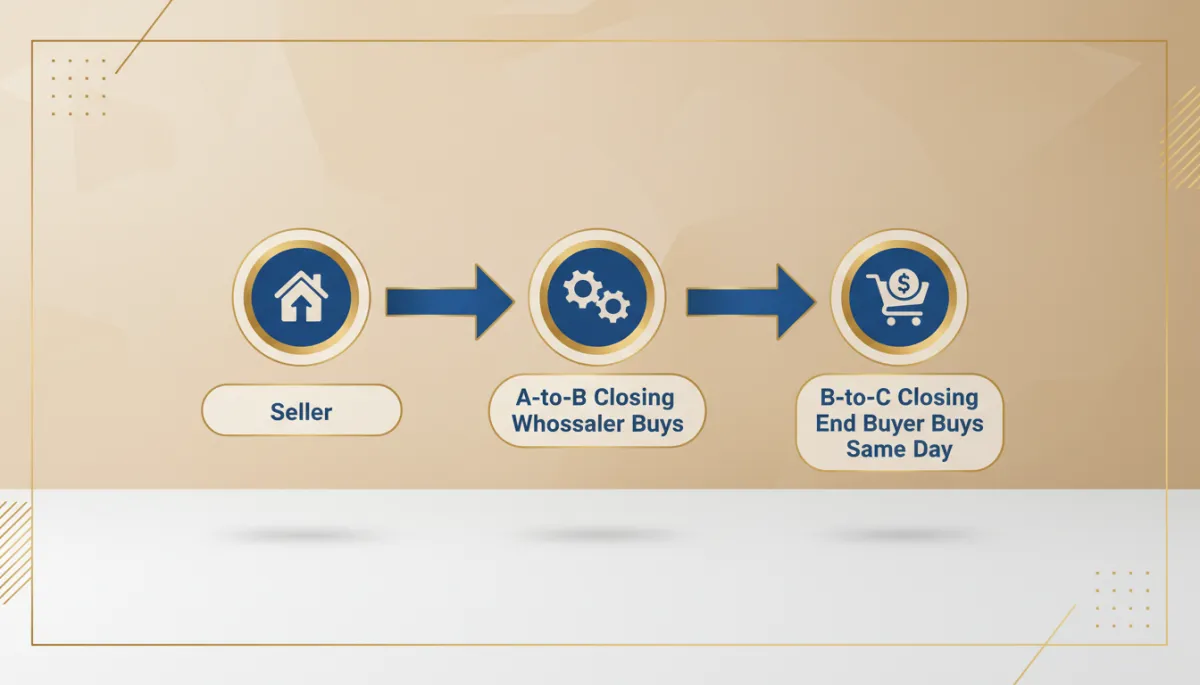
In a true double close, money flows twice but your profit is protected.
What Does Transactional Funding Cost in Texas in 2024?
Here’s the part everyone worries about — the fee. The good news is, in Texas right now, transactional funding is surprisingly affordable, especially when you compare it to the size of your wholesale spread and the fact that you’re using none of your own cash.
- Most Texas providers charge around 1–3% of the purchase price as a one-time fee, typically with a minimum somewhere between $700 and $2,000 depending on the lender and deal size (see ranges from providers like KP Close, Texas Investor Financing, and others in 2024 market data).
- Some add small extras like a wire fee or doc prep fee, usually under a few hundred dollars, while others roll everything into a flat percentage.
- Faster, same-day transactional funding for wholesalers San Antonio and elsewhere in Texas often qualifies for the lower end of the range — around 1% — while extended 24–72 hour holds might run closer to 2%.
On a $165,000 A-to-B purchase, a 1.5% fee is $2,475. If your spread is $20,000, you’re still clearing roughly $17,500 before your own closing costs — using none of your own capital. That’s the trade-off: a small slice of the pie in exchange for being able to bake way more pies.
When Should Wholesalers Use Transactional Funding — and When Should You Skip It?
We’re big fans of transactional funding, but we’re even bigger fans of using the right tool for the job. Here’s how we think about the assignment vs. double close decision with our own students and partners.
Use Transactional Funding When…
- Your fee is large and you want privacy. If your spread is $25,000+ and you don’t want the seller or end buyer seeing your assignment number on the HUD, a double close with transactional funding keeps your profit confidential.
- The contract or lender doesn’t allow assignments. Some bank-owned properties, hedge funds, and conventional lenders flat-out prohibit assignments. In that case, a double closing is often the only way to get paid.
- You want to look like the actual buyer. In more sophisticated or sensitive situations, being on title (even for a few hours) can give you more control and credibility in the transaction.
Skip Transactional Funding and Just Assign When…
- The seller and end buyer are cool with assignments. If everyone’s on board and your fee is reasonable, an assignment is usually cheaper and simpler. No double closing, no extra funding fee, fewer moving parts.
- Your spread is tight. If your profit is only $5,000–$7,500, a 1–2% transactional fee plus extra closing costs might eat too much of it. In those cases, we usually push for an assignment structure first.
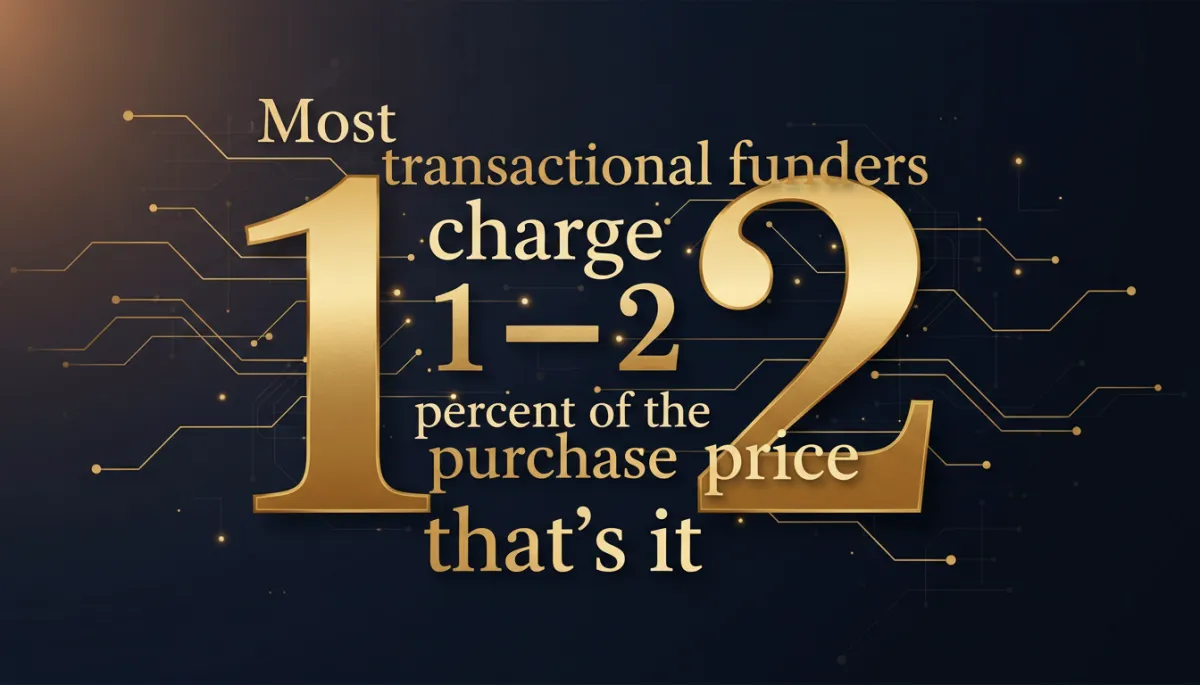
A small 1–2% fee can unlock deals you’d otherwise walk away from.
Why Texas (and San Antonio) Are Perfect for Transactional Funding
We’re obviously biased — we love our home state — but Texas is a fantastic market for transactional funding and wholesaling when you understand the rules. Wholesaling is legal here, but the Texas Real Estate Commission (TREC) has tightened up some disclosure requirements in recent years, especially with Senate Bill 1577 and related guidance in 2024 that emphasize clear written disclosure of your equitable interest to both sides of the deal.
A few Texas-specific notes for double closing transactional funding Texas 2024:
- Work with investor-friendly title companies who understand A-to-B/B-to-C structures and will cooperate with your transactional funder. Not every title office is comfortable with wholesaling — choose wisely.
- Make sure your contracts and disclosures properly reflect your role as a principal in the transaction, not as an unlicensed broker. That means you’re buying and reselling for your own account, not acting as an agent for a fee.
- In hot markets like San Antonio, Austin, and DFW, same-day transactional funding for wholesalers San Antonio is extremely common. Title offices and lenders here are used to back-to-back closings, which makes the whole process smoother.
Real-World Case Study: A Same-Day Double Close in San Antonio
Let’s bring this down to earth with a real-style example similar to deals we’ve funded here in Bexar County.
- The property: A tired 3/2 in a solid San Antonio rental neighborhood. ARV around $250,000, light cosmetic rehab needed.
- A-to-B contract: Our wholesaler client put it under contract at $160,000 with a motivated seller who needed to move quickly.
- B-to-C contract: Within a week, they had a landlord buyer ready at $185,000, all cash, closing in 10 days.
The buyer’s lender and the title company both said, “No assignments. Double close only.” Our client didn’t have $160,000 — they had hustle, a great deal, and that’s it. So they called us. We reviewed both contracts, verified the end buyer’s funds, and agreed to provide same-day transactional funding for the full A-to-B purchase price plus closing costs.
On closing day:
- We wired in roughly $163,500 for A-to-B (purchase plus closing costs).
- A couple of hours later, the end buyer closed at $185,000 on B-to-C.
- Title paid us back our funds plus a ~1.5% fee out of the B-to-C proceeds.
After all fees and closing costs, our wholesaler walked out with a net profit of just over $18,000. They never wired a dime into escrow. That’s the power of using transactional funding for wholesale real estate in Texas strategically instead of letting “no assignment” language kill your deal.

The right funding partner turns paper profits into real checks at the closing table.
How to Find and Vet a Transactional Funder in Texas
Whether you work with us or someone else, please don’t just grab the first Google result and hope for the best. This is your reputation and your payday on the line. Here’s how we’d coach a friend to vet a transactional funding partner.
Smart Questions to Ask
- “Do you fund in Texas, and are you familiar with double closings here?” You want someone who already understands Texas title practices and wholesaling regulations, not a lender learning on your deal.
- “What are your exact fees and minimums?” Get clear on percentage, minimum fee, and any extra charges (wire, doc prep, admin). No surprises at the HUD table.
- “Do you require appraisals, credit checks, or income docs?” Most true transactional funders do not. If they’re underwriting you like a hard money loan, that’s a red flag for wholesaling speed.
- “How quickly can you fund once title is clear?” For competitive Texas deals, you want someone who can wire same day once docs are in and all parties are ready.
Red Flags to Watch For
- Vague or constantly changing fee quotes.
- No experience with same-day transactional funding for wholesalers San Antonio or other major Texas markets.
- Asking you to bring in your own money “just in case” — that defeats the whole purpose of transactional funding no money down real estate wholesale.
Ready to Close More Texas Wholesale Deals With None of Your Own Cash?
Between us, we’ve closed 450+ transactions and raised millions in private capital. We’ve seen almost every version of “I’ve got a deal but no money” that Texas wholesalers can run into — and we built our transactional funding programs specifically to solve that problem without drama or games at the closing table.
If you’re working on a wholesale deal anywhere in Texas and you’ve been told you need a double close — or you simply want to protect a big fee — we’d love to take a look. We’ll walk you through whether an assignment or transactional funding makes more sense, run the numbers with you, and, if it’s a fit, help you get from “great contract” to “funded and closed.”
Meta Title: Transactional Funding Explained: Close Wholesale Deals in Texas With Zero of Your Own Money. Meta Description: Michelle & Vin break down how transactional funding works for real estate wholesalers — what it costs, when to use it, and how to close double-closing deals in Texas with none of your own cash. Focus Keyword: transactional funding for wholesale real estate in Texas. OG Title: Transactional Funding Explained: Close Wholesale Deals in Texas With Zero of Your Own Money. OG Description: Learn how Michelle & Vin use same-day transactional funding to help Texas wholesalers close double closings without using their own money.