
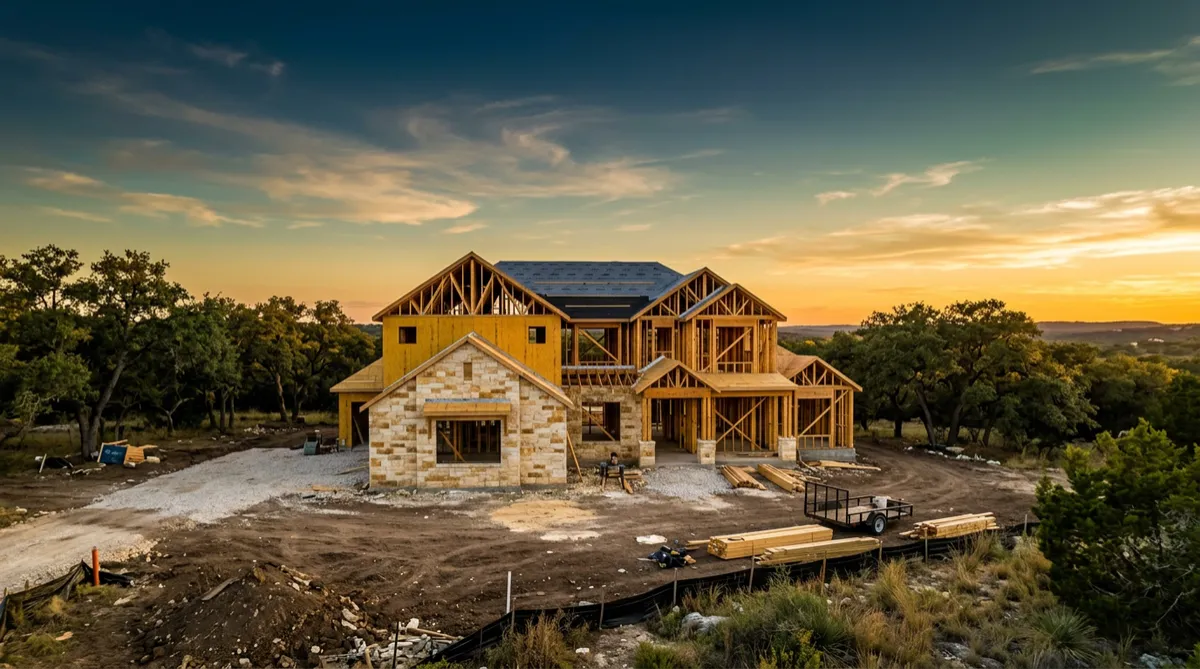
New Construction Loans in San Antonio: How Investors Get Funded
Here's a confession: we love a good ground-up build. There's something about turning a flat, weedy lot into a finished house that feels like real investing. Then a friend asks, "Cool, but how do I actually pay for it?" and the room goes quiet.
That's where new construction loans come in. If you've only ever bought and renovated, financing a build can feel like learning a new language. Draws, retainage, as-complete value. Who talks like this?
We do. All day. So let's walk through how new construction loans work for investors in San Antonio, what lenders really want to see, and the mistakes that quietly eat your timeline (and your margin).
What a New Construction Loan Actually Is
A new construction loan is short-term financing that pays for building a property from the ground up. It's not like a regular mortgage, where the lender hands over one big check for a house that already exists. Here, the house doesn't exist yet, so the money is released in pieces as the work gets done.
Most investors use these loans two ways:
- Build to sell: you build, sell the finished home, and repay the loan from the sale.
- Build to hold: you build, then refinance into longer-term financing (often a DSCR loan if it's a rental) and keep the property.
Either way, the loan is a bridge between "dirt" and "done." Terms vary by lender and by deal, so treat anything you read online (including here) as the framework, not a quote.
Why Investors Build Instead of Buy
We get it. Buying an existing house is easier. But in a market where good inventory can be thin, building gives you something a flip rarely does: control. You choose the layout, the finishes, and the number of bedrooms. You're building the exact product your buyer or tenant wants, and the whole thing is brand new, so there's no mystery roof hiding behind a coat of paint.
The tradeoff is that you carry more moving parts. More permits, more subcontractors, more ways for a schedule to slip. That's why the financing side needs to be tight before a single shovel hits the ground.

How the Draw Schedule Works
This is the part that trips people up. With a new construction loan, you usually don't get the full loan amount at closing. Instead, funds are released in "draws" as you hit construction milestones.
A typical flow looks like this:
- The loan closes and the first draw covers the foundation work.
- Framing gets finished, a lender inspection confirms it, and the next draw is released.
- Rough-ins (plumbing, electrical, HVAC) get inspected and funded.
- Drywall and finishes follow.
- The final draw comes once the home is complete and passes final inspection.
Notice the pattern: work first, money second. Your builder will probably need to cover some costs up front, or you'll need cash reserves to keep things moving between draws. If you assume the lender will wire money the second you ask, you'll end up with a stalled job site and a very unhappy framer.

Pro tip from us: ask any lender how long draws take to process. A draw that takes 10 days instead of 3 can cost you a contractor. Speed matters more than most people realize.
What Lenders Want to See
Lenders are really asking one question: "Will this project get finished, and will it be worth more than it cost?" Everything they request is just a way of answering it. In our experience, they focus on four things.

1. A clear budget and scope
A napkin sketch won't cut it. You'll want plans, a line-item construction budget, and a realistic timeline. The more specific your numbers, the more confident a lender feels.
2. An experienced builder
If it's your first build, your general contractor's track record carries a lot of weight. Be ready with their past projects, licensing and insurance details, and references. A great builder can make up for a thinner investor resume.
3. Cash in the deal
Most lenders want you to have skin in the game, whether that's cash toward the land, the build, or both. How much depends on the lender and the project. This is also where relationships matter, and where private money sometimes steps in to help fill gaps.
4. An exit plan
Sell or refinance? Either is fine, but you need to pick one and back it up. For a sale, show comparable homes. For a hold, show the rent numbers and how the property would qualify for permanent financing later.
San Antonio Details Worth Knowing Before You Break Ground
Every market has quirks. A few things we'd put on your pre-build checklist here in the Alamo City:
- Permits and timelines: Permitting can take longer than you expect. Build that cushion into your schedule and your interest carry.
- Utilities: Confirm water, sewer, and electric availability to the lot early. Extending service to a lot can add real money and real time.
- Soil and site work: Central Texas soil can be tricky, and some parts of the San Antonio area have extra environmental rules. Get a site evaluation and talk to your builder about foundation needs before you lock your budget.
- Land that fits the plan: Zoning, lot size, and deed restrictions can quietly kill a project. Verify before you close on the land.
None of this is glamorous. All of it protects your profit.
The Costs Everyone Forgets
Your construction budget isn't just lumber and labor. Make room for:
- Interest on the funds as they're drawn
- Lender fees and closing costs
- Inspection and draw fees
- Builder's risk insurance
- A contingency buffer (we like to see one, because surprises happen)
- Holding costs if the build runs long
- Selling costs at the end, if you plan to sell
If your numbers only work with zero hiccups, they don't really work. Build in a cushion and you'll sleep better.
A Quick Example Deal
Let's make this real with simple, made-up numbers. Say you buy a lot for $65,000 and the build comes in at $235,000. Your total cost is $300,000. If comparable new homes in the area are selling around $410,000, it looks like you have a $110,000 spread.
But that spread is not your profit. Take out financing costs, closing costs, insurance, contingency, and selling costs, and the real number is smaller. That's normal. The point of running the math upfront is to find out whether the deal still works after the "boring" costs. If it does, you've got a project worth funding. If it only works on paper, walk away and save yourself the headache.

The numbers above are for illustration only and aren't a quote or a promise of results.
Mistakes That Stall a Build
We've seen the same few problems pop up again and again:
- Underestimating the timeline. Weather, inspections, and material delays are all real. Plan for slippage.
- Thin reserves. Draws arrive after the work, so you need cash to bridge the gaps.
- Skipping the lender conversation. Talk to a funding partner before you buy the land, not after. The loan terms should shape the deal, not the other way around.
- No exit backup. If the market shifts, what's plan B? Maybe it's renting the house and refinancing instead of selling.
- Hiring on price alone. The cheapest bid isn't always the cheapest build.
Where to Start
If you're eyeing a lot in San Antonio and wondering how to make the numbers work, start with these steps:
- Get your plans, budget, and builder details together.
- Run your numbers with every cost included, not just construction.
- Decide your exit: sell or refinance.
- Talk to a financing team early, before you commit to the land.
That's exactly what we do. We're Michelle & Vin, and we help real estate investors line up the right financing for the deal in front of them, whether that's a build, a flip, a hold, or something in between. If you've got a project in mind, come talk to us. We'll look at it with you, honestly, and tell you what we think. No pressure, no jargon.
This post is for general education and isn't financial or legal advice. Loan terms, availability, and requirements vary by lender and by deal.