

GAP Funding for San Antonio Real Estate Investors
Real Estate Investing, GAP Funding, San Antonio
GAP Funding for Real Estate Investors in San Antonio: How to Cover the 10–20% Your Lender Won’t Finance
We’re Michelle & Vin, “the money couple” here in San Antonio. If you’ve ever found the perfect deal, got a solid loan… and then realized you’re still short $30K–$80K, this one’s for you. Let’s talk about GAP funding for real estate investors and how to safely plug that missing 10–20% without blowing up your numbers.

What Is GAP Funding in Real Estate, Really?
Let’s clear up what GAP funding is in real estate before we dive into strategy. When you hear people talk about GAP funding for real estate investors, they’re talking about money that fills the space between:
- what your primary lender (usually a hard money or private lender) will finance, and
- the total capital you actually need to close and renovate the deal.
Most San Antonio hard money lenders will go to maybe 80–90% of purchase and sometimes a big chunk of rehab. That still leaves you with:
- down payment money,
- closing costs, and
- some rehab or holding costs that aren’t covered.
That uncovered piece is the gap. GAP funding is money specifically raised to cover that shortfall—often 10–20% of the project cost. Think of it as the bridge between “almost funded” and “fully funded and ready to close.”
Where GAP Funding Sits in the Capital Stack
When we talk capital stack on a San Antonio fix and flip, it usually looks like this, from safest to riskiest:
- Senior lender / hard money lender – first lien on the property, biggest check, lowest risk in the deal.
- GAP funding / second position gap loan – smaller loan that sits behind the senior lender. Higher risk, higher rate, often shorter term.
- Your cash / equity – your skin in the game, sometimes combined with a JV partner’s funds.
In other words, GAP funding is usually subordinate to the main loan. If the deal goes sideways and the property has to be sold in a hurry, the senior lender gets paid first, the gap funder next, and you last. That’s why gap funding vs hard money will always feel more expensive: the gap money is taking more risk for a smaller slice of the pie.
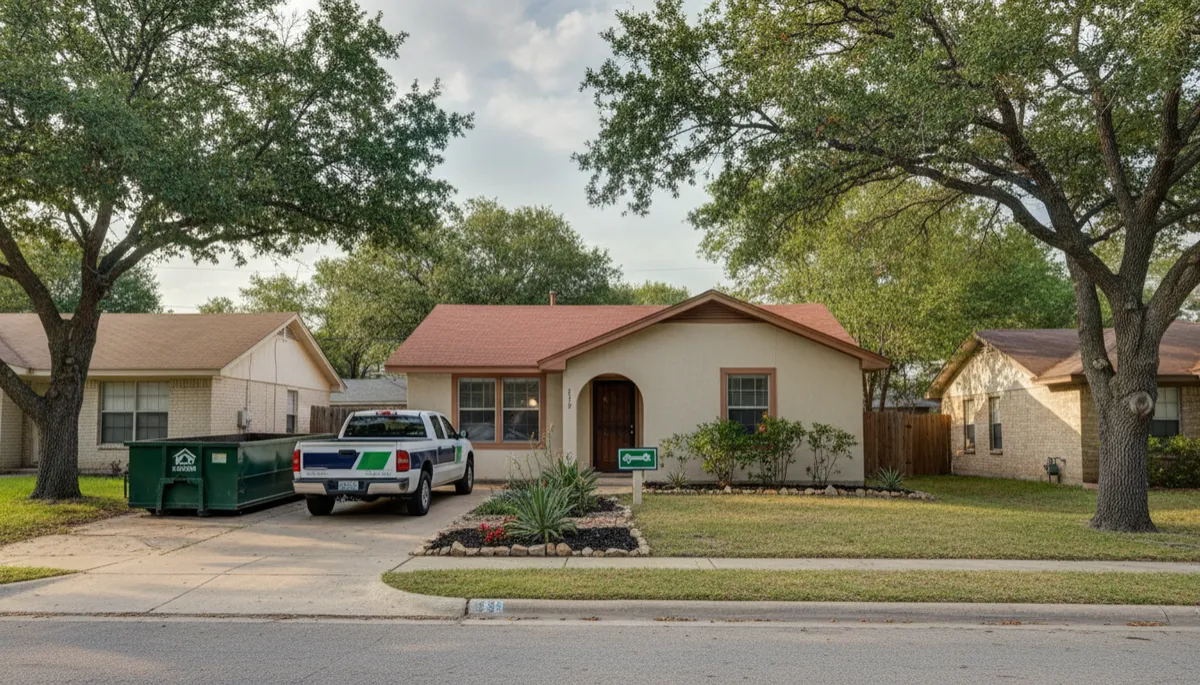
Many San Antonio fix and flip projects only miss the finish line by 10–20% in funding.
A Real Fix-and-Flip Example: How GAP Funding Works with Numbers
Let’s walk a simple example so you can see how gap funding for fix and flip deals actually plays out. Numbers are illustrative, not promises—this is just how the math works.
The Deal
- Purchase price: $220,000 (distressed property on the Northeast Side)
- Rehab budget: $60,000
- Total project cost (before carrying/closing): $280,000
The Senior Lender (Hard Money)
- Will fund 85% of purchase: $187,000
- Will fund 100% of rehab in draws: $60,000
Total from senior lender: $247,000.
The Funding Gap
- Total project cost: $280,000
- Less senior lender funds: $247,000
You’re short $33,000 before even counting holding costs, insurance, utilities, and a bit of cushion. Realistically, you might want closer to $45,000 to breathe easy.
Enter GAP Funding
You line up a second position gap loan for $40,000 from a private lender or specialized gap funder. Terms might look like this (illustrative only, since real terms vary by lender and deal):
- Interest rate: 14–16% annualized (common range is 12–18% for gap funding in San Antonio and statewide)
- Points: 2–4% up front on the gap amount
- Term: 6–12 months, interest-only, paid off when you sell or refinance
Let’s say you borrow $40,000 at 16% interest for six months with 3 points:
- Points: 3% of $40,000 = $1,200 (paid at closing from the loan proceeds)
- Interest: 16% annual on $40,000 for 6 months ≈ $3,200
Your total cost of gap funding on this deal is roughly $4,400, assuming you hit your six‑month timeline. That’s the price you pay to close the deal without bringing $40K cash to the table.

GAP funding usually sits between the senior lender and your own cash in the capital stack.
When GAP Funding Makes Sense (and When It Really Doesn’t)
Good Situations for GAP Funding San Antonio Investors
- High‑confidence ARV and strong margin. You’ve got solid comps, conservative ARV, and a real spread after all costs including expensive gap money and a little surprise factor.
- Short timeline. The project is a light‑to‑moderate rehab you can realistically turn in 4–7 months, not an 18‑month science project.
- Experienced team. Either you or your contractor has a track record. GAP funders love borrowers who’ve actually finished a rehab before.
Times to Walk Away from GAP Funding
- Thin margins. If your projected profit is only $20K and your gap funding could cost $7K–$10K, one delay or surprise and you’re working for free—or worse.
- Heavy rehabs with lots of unknowns. Foundation question marks, big additions, or city permits that love to take their sweet time? Layering expensive gap money on top of that is asking for trouble.
- No clear exit strategy. If you can’t clearly explain whether you’re flipping, BRRRRing, or who your end buyer is, you’re not ready to take on extra leverage.
What Lenders and GAP Providers Look For
Whether you’re talking to a San Antonio hard money lender, a private GAP funding San Antonio provider, or a platform that offers unsecured capital, they all care about a few core things:
- Deal quality. Purchase price versus ARV, rehab scope, and whether your numbers make sense in today’s San Antonio submarket (not 2021 fantasy land).
- Total leverage. Combined loan‑to‑cost (LTC) and loan‑to‑value (LTV). Many private gap funders like to see total financing under about 85–95% of project cost, depending on experience and structure.
- Your track record. Prior flips, rentals you own, or even contractor experience. Newer investors can still get funded, but you’ll lean more on strong partners and conservative numbers.
- Exit strategy. Flip with Realtor listing, BRRRR into a DSCR or conventional loan, or sell to an end‑user. They want to know how they get paid back—and when.
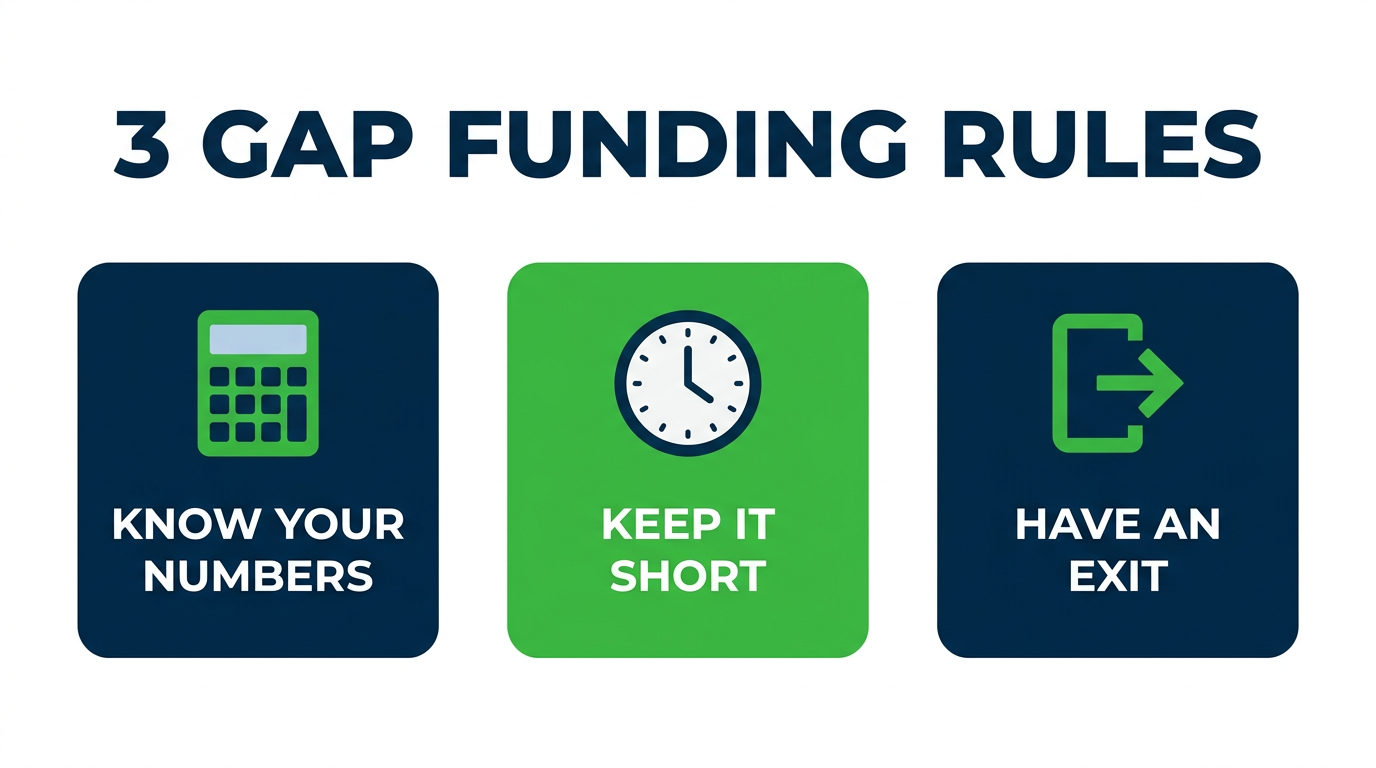
The best GAP funding deals combine strong margins, realistic timelines, and clear exit strategies.
Costs and Risks: The Honest Conversation
Typical Cost of GAP Funding
Terms vary by lender and deal, but here is what we commonly see:
- Second‑position gap loans: roughly 12–18% interest, plus 2–5 points up front on the gap amount.
Key Risks to Respect
- Timeline risk. If your six‑month flip turns into 11 months, your interest cost can double. That hits your profit fast when the money is expensive.
- Market risk. If ARVs soften or days‑on‑market stretch, you may need to cut price to exit, again shrinking your margin while interest keeps ticking.
- Stacked leverage. The more debt in the deal, the less room you have for surprises. GAP funding magnifies both your upside and your downside.
Simple Checklist: Steps to Secure GAP Funding the Smart Way
- Underwrite the deal conservatively. Run ARV comps for your exact San Antonio submarket. Stress‑test your numbers with longer hold times and slightly lower sale price.
- Lock in your primary lender first. Get the hard money or senior loan term sheet so you know exactly how big the gap is and what their requirements are for second liens or additional financing.
- Decide what kind of gap capital fits. Second‑position gap loan, private money partner, unsecured business line, or even a city‑backed program if you’re in the affordable housing lane.
- Prepare a clean deal package. Scope of work, budget, timeline, comps, photos, your experience, and your exit plan. The more pro you look, the more options you’ll have and the better terms you can negotiate.
- Compare total cost, not just rate. Factor in points, interest, profit shares, and fees. Look at the full cost of capital against your projected profit.

Closing day is the goal: a deal that pencils out and gets funded the right way.
Short FAQ: GAP Funding for Real Estate Investors
Is GAP funding the same as hard money?
Not quite. Hard money is usually your main, first‑position loan. GAP funding is the extra capital that fills in what your hard money lender doesn’t cover—often in second position or as unsecured capital. You can absolutely use both on the same deal if your lenders allow it and the numbers support it.
Can I use GAP funding for the down payment?
Sometimes. Some lenders are fine with documented gap funding for down payment; others want to see your own cash in the deal. Always check your primary lender’s rules before you sign a gap loan. Hiding a second lien is a fast way to get blacklisted in this business.
Ready to Talk GAP Funding on Your Next San Antonio Deal?
If you’re still reading, you’re exactly the kind of investor we like—curious, careful, and serious about the math. GAP funding for real estate investors isn’t magic money, but when you understand where it sits in the capital stack and what it really costs, it can be a strategic way to do more deals with less of your own cash.
We’re Michelle & Vin, and we spend our days helping San Antonio investors structure smart financing—whether that’s straight hard money, layered capital with a second‑position gap loan, or a cleaner path that fits your risk tolerance better. If you’ve got a deal you’re excited about and you’re staring at a 10–20% shortfall, let’s walk through it together and see if gap funding actually makes sense for this specific property.
Bring us your numbers, your questions, and your “is this crazy?” scenarios. We’ll bring the spreadsheets, the lender relationships, and the honest feedback. No hype, no guarantees—just real talk about how to fund your next San Antonio project the smart way.