
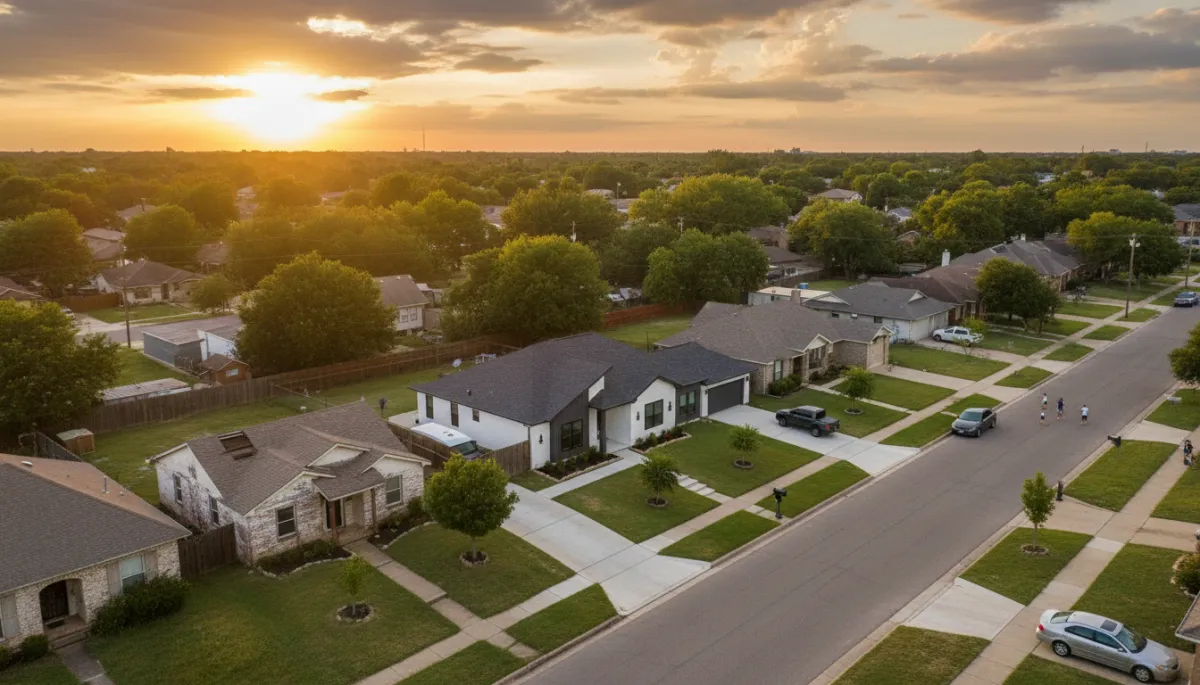
Fix and Flip Loan Requirements for First-Time Real Estate Investors in Texas
Fix and Flip Loan Requirements for First-Time Real Estate Investors in Texas | Michelle & Vin
New to fix and flip investing in Texas? Michelle & Vin break down exactly what lenders look for — ARV, credit, experience, and deal structure — so you can get funded fast.

You Found the Deal. Now What?
Let us paint you a picture.
You're scrolling through listings and you find it — a 3-bed, 1-bath in a neighborhood that's clearly heating up. Purchase price looks right, the ARV math is making your brain buzz, and your contractor buddy did a quick walkthrough and said the rehab is totally doable. You're fired up. This could be your first deal.
And then you hit the wall. You call a bank. They want two years of W-2s, a pristine debt-to-income ratio, and six months of reserves. You Google "fix and flip loans" and now you're buried under a hundred contradicting websites with click-bait headlines and zero real answers. You don't know who to trust, what you qualify for, or where to even start.
We've heard this story more times than we can count. And that's exactly why we wrote this post.
If you're a first-time investor in Texas who's serious about making fix-and-flip work, we're going to break down exactly what you need to know — how these loans work, what lenders actually care about, what makes Texas one of the best states in the country to flip in, and how to position yourself to get funded even without a track record. Let's go.
What Is a Fix and Flip Loan, Really?
A fix and flip loan is a short-term loan designed for investors who are buying a distressed property, renovating it, and selling it for a profit. Simple concept — but there are a few key differences from a conventional mortgage that you need to understand before you apply for anything.

These are not bank loans. They come from hard money lenders and private lenders — entities that make decisions based primarily on the property's value and deal numbers, not your W-2 income or your relationship with a branch manager.
They're fast. A conventional mortgage might take 30–45 days to close. A fix and flip loan can close in 7–14 days. In competitive markets, that speed is everything.
The terms are short. Most run 6–24 months. You buy, renovate, sell, and pay it off. The loan is the bridge between your purchase and your profit.
The approval process is property-focused, not income-focused. No W-2 required. What the lender wants to know is whether the deal makes sense — not whether you have a salary. That changes everything for investors who don't fit the traditional borrower mold.
The 5 Things Lenders Actually Care About
When a fix and flip lender evaluates your deal, here's what they're looking at — and what you should be ready to speak to confidently.

1. ARV — After Repair Value
ARV is the most important number in your deal. It's the estimated value of the property after all renovations are complete, and lenders use it to determine how much they'll lend you. Most will finance up to 70–75% of ARV. So if your ARV is $300,000, you might access $210,000–$225,000. Know this number cold before you pick up the phone — and pull honest, conservative comps, not cherry-picked optimism.
2. Loan-to-Cost (LTC)
LTC is your total loan amount relative to your total project cost — purchase price plus rehab budget. Many lenders finance 80–90% of LTC, which means you're bringing some skin to the game. If your all-in project cost is $200,000, expect to bring $20,000–$40,000 to the table. Have that capital liquid — not locked up in retirement accounts.
3. Credit Score
Most fix and flip lenders want to see a 620–640 minimum credit score. Some go as low as 580; others want 680+. Your score isn't the primary approval driver — the property is — but it directly affects your interest rate and terms. If your score needs work, start there before approaching lenders.
4. Exit Strategy
Lenders want to know exactly how you're getting out of the loan. Selling? Refinancing into a DSCR rental loan? Both work — but "I'll figure it out" is not an exit strategy, and experienced lenders can spot a non-answer from a mile away. Come in with a clear, realistic plan.
5. Experience — and How to Work Around Having None
Yes, experience matters. Seasoned investors get better rates and terms. But here's the truth: every experienced investor started with zero deals. Lenders know that. What they're really evaluating when you have no track record is how well you understand the project you're bringing them. Come prepared. Know your numbers. Have your scope of work done. Competence is the currency that replaces experience when you're just starting out.
Texas-Specific Advantages for Fix and Flip Investors
We're genuinely bullish on Texas — and not just because we're based in San Antonio. The structural advantages here for fix and flip investors are real, and they stack in your favor in ways most other states don't.

No state income tax. More of your flip profit stays in your pocket. On a $40,000 gross profit, keeping the 5–9% that would've gone to state income taxes is real money.
Multiple strong appreciation markets. San Antonio, Austin, Dallas-Fort Worth, Houston — Texas has several major metros with consistent population growth, housing demand, and inventory constraints. The ARV you calculate today is likely to hold, and in some neighborhoods, it's outpacing projections.
Non-judicial foreclosure state. Texas allows lenders to foreclose without going through the courts if a borrower defaults. That reduced lender risk often translates to more competitive lending terms and more lending appetite in Texas compared to states where foreclosure drags on for years.
A robust investor ecosystem. Because Texas draws so many real estate investors, there's a thriving network of hard money and private lenders who specialize in this market. You have real options — and more options mean better terms for you.
We especially love San Antonio right now. Steady appreciation, a workforce housing shortage, military relocation demand, and strong rental dynamics create favorable conditions on both the flip side and the hold-and-rent side of the strategy.
Common First-Timer Mistakes (and How We've Seen Them Play Out)
We've watched a lot of first deals happen over the years. Here's what tends to go sideways — and how to avoid it.
Overestimating ARV. This is the most expensive mistake a first-timer can make. When you're excited about a deal, it's easy to pull comps that support what you want the number to be. Don't do it. Pull honest, conservative comps. Build your deal around reality, not optimism. Your profit margin is your buffer — protect it.
Underestimating rehab costs. Contractors bid low to win the job. Scope creep is real. Hidden problems behind walls are real. Add a 15–20% contingency buffer to every rehab estimate before you run your numbers. If you don't need it, great. If you do — and you probably will — you'll be glad it's there.
Skipping the scope of work. A detailed scope of work — itemized, room by room, line by line — isn't optional. It protects you from contractor disputes, keeps you on budget, and signals to lenders that you know exactly what you're getting into. If your contractor won't provide one, that's a red flag.
No exit strategy. We've said it twice and we'll say it again. Know your exit before you close. The answer shapes your loan term, your renovation scope, even your listing price.
Going with the first lender you find. Shop your deal. Rates, origination fees, and loan structures vary significantly between lenders. A single point difference in rate or lower origination fees can meaningfully affect your bottom line.
How to Position Yourself as a Fundable Borrower
You don't need ten flips on your resume to get your first deal funded. But you do need to show up prepared. Here's how to make a strong impression even as a first-timer applying for fix and flip financing in Texas.
Build a simple deal package. A one-pager with your purchase price, rehab budget, ARV, projected profit, and exit strategy. This single document separates you from 80% of first-time borrowers who walk in without one.
Get your scope of work done before you apply. Nothing communicates competence like walking in with itemized rehab costs from a licensed contractor. It shows the lender you've vetted the project, not just the listing.
Clean up your credit. Pull your report, dispute errors, and pay down revolving balances. Even a 20-point score improvement can unlock a better rate tier. Don't leave points on the table.
Build lender relationships before you need them. Reach out now. Get pre-qualified. Know what you can borrow before you make an offer. Investors who have their financing conversations in advance close deals. Investors who scramble for money after finding a deal often lose it to someone more prepared.
Have your down payment liquid. Have 10–20% accessible — not tied up in retirement accounts that take weeks to move.
The Money Couple's Take
Here's our honest take after 450+ transactions: the biggest thing holding first-timers back isn't access to money. It's preparation and confidence.
Lenders fund deals, not people. If your deal is solid — the numbers work, the exit is realistic, the property is in a market with demand — money is available for it. The question is whether you can present it credibly enough that a lender wants in.
We work with first-time investors all the time. Some come to us polished, deal package in hand, scope of work done, comps pulled. Others come to us raw and eager, needing help structuring before they're ready to approach a lender. Both types get funded. What we can't work with is someone who hasn't done the homework at all.
If you're serious about this — do the work. Then let's talk. Texas right now is one of the best environments we've seen in years to start fix and flip investing, and we'd love to help you make your first deal happen.

Ready to Get Your First Fix and Flip Funded?
We work with investors across Texas — San Antonio, Houston, Dallas-Fort Worth, Austin, and beyond — to structure fix and flip loans that work for your deal and your goals. Whether it's your very first project or you're looking to scale what you've already built, we'll help you figure out the financing side so you can focus on the flip.
Reach out to Michelle & Vin today. Let's run your numbers together, look at your deal, and get you moving. You found the deal — we'll help you fund it.
Disclaimer: This content is provided for educational, informational, and entertainment purposes only. It is not legal, tax, accounting, investment, financial, or professional advice. Michelle and Vin are not acting as your attorney, CPA, financial advisor, or other licensed professional. Every situation is different. Conduct your own due diligence and consult your qualified professional team before making any business, real-estate, lending, investment, legal, tax, or financial decision. Nothing in this article is a promise or guarantee of results.