
Fix and Flip Draw Schedules in Texas: Don't Stall Mid-Rehab
Fix-and-Flip Rehab Draws in Texas: How to Not Get Stuck Mid-Project
Picture this: you grab a little three‑bed, one‑bath on the West Side of San Antonio. Great bones, ugly everything else. You line up your contractor, close on a hard money loan, and you’re feeling like you just bought the next HGTV feature.
Demo flies by. Framing’s done. Then your contractor calls and says, “We need money for electrical and windows.” You call your lender and hear, “We’ll send out a draw inspector. Funds in 3–5 business days after approval.” Meanwhile, your crew wants to be paid Friday, and your supplier won’t release materials without a check. The property sits, holding costs tick up, and that “great deal” starts bleeding cash.
We’re Michelle & Vin, “the money couple” here in San Antonio. We see this story all the time—not because the deal is bad, but because the draw process is misunderstood. In this guide, we’ll walk you through how rehab draw schedules work in Texas so your next flip doesn’t stall out for lack of cash.
The San Antonio Story We See All the Time
That West Side flip story? It’s not rare—it’s Tuesday. The problem usually isn’t the ARV, the neighborhood, or even the contractor. It’s a misunderstood draw process. If you don’t know how your lender releases rehab funds, you can end up “rich on paper” and broke in the middle of framing.
Our goal here is simple: help you understand how a fix and flip loan draw schedule actually works in Texas, so you can plan your cash, keep your crews moving, and get to that clean before‑and‑after photo without panic phone calls in between.
How Rehab Draw Schedules Work on a Fix-and-Flip Loan
Before you ever close, your lender wants a detailed rehab budget—line items, costs, and total scope. That budget becomes the backbone of your draw schedule. Instead of handing you the full rehab amount at closing, they release it in stages as work is completed and verified. It protects them from risk—and it forces you to run your project like a business, not a shopping spree at Home Depot.
- Total rehab budget: The full amount allocated for construction (labor + materials).
- Draw schedule: The roadmap showing what percentage of that budget is released at each milestone.
- Milestones: Specific phases of work (demo, rough‑in, drywall, finishes, final).
Different lenders structure hard money rehab draws slightly differently, but most follow the same logic: they reimburse you for work that’s complete and verified, not work you plan to do “soon.” Understanding how rehab draws work on a fix and flip loan is just as important as knowing your interest rate or your ARV.
A Realistic Example of a 5‑Stage Rehab Draw Schedule
Let’s walk through a simple, purely illustrative example. Numbers are for education, not a quote or guarantee. Assume:
- Purchase price: $180,000
- Rehab budget: $60,000
- After‑repair value (ARV): $300,000
Your lender agrees to fund the full $60,000 rehab, but in five draws tied to inspections:
- Draw 1 – Demo & Prep (15%): $9,000 when demo, trash haul‑off, and initial structural repairs are complete.
- Draw 2 – Rough‑In (25%): $15,000 after plumbing, electrical, HVAC rough‑ins, and framing are done and pass city inspections where required.
- Draw 3 – Drywall & Exterior (25%): $15,000 once insulation, drywall hang and tape, and exterior siding/roof repairs are complete.
- Draw 4 – Interior Finishes (25%): $15,000 after cabinets, flooring, tile, trim, and interior paint are substantially complete.
- Draw 5 – Final (10%): $6,000 after final punch list, fixtures, landscaping, and cleaning are complete and the property is market‑ready.
Notice what’s missing: there’s no “I need $15,000 up front for materials” line. You’re expected to front some cash, get work done, then be reimbursed through each rehab draw request in San Antonio or anywhere else in Texas. That’s where a lot of investors get surprised—and stuck.
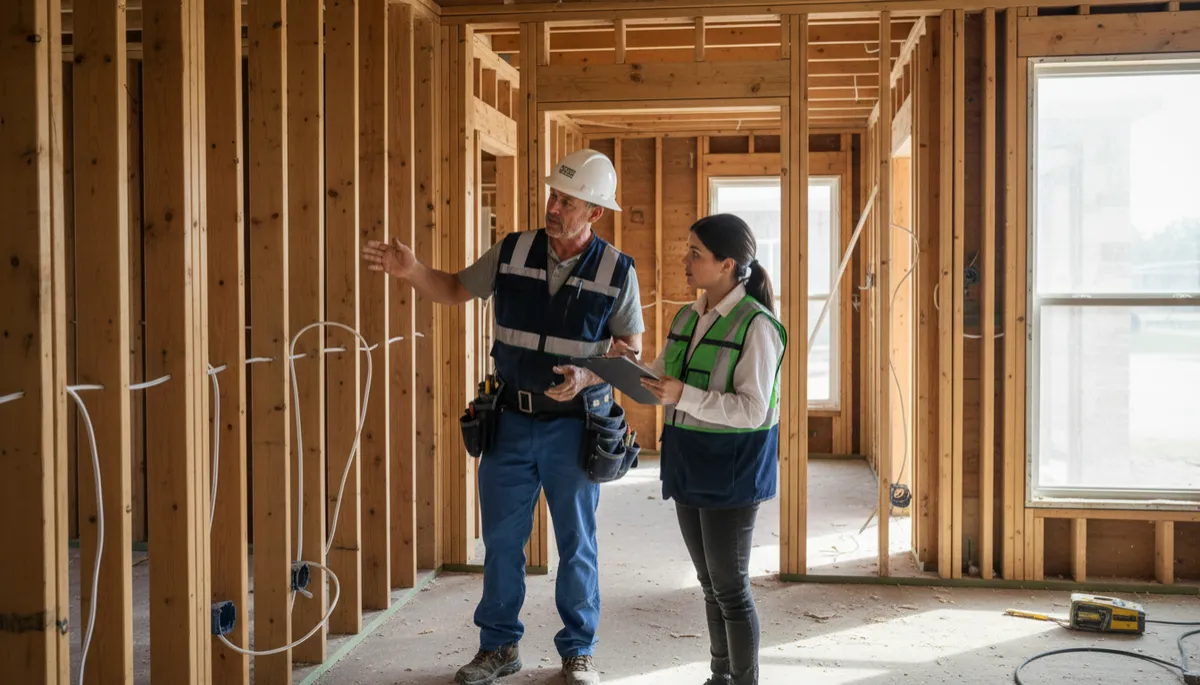
Every draw inspection is a checkpoint to confirm work is complete before funds are released.
How Draw Inspections and Reimbursements Actually Work
Let’s demystify the inspection process, because this is the part that can either feel smooth or like you’re wrestling a bureaucracy while your crew waits in the driveway.
- You request a draw. You submit a draw request to your lender—usually through a portal or email—listing which line items are complete and how much you’re asking for based on the agreed schedule.
- An inspector visits the property. The lender sends either an in‑house inspector or a third party. They’re checking that the work you claimed is actually done and matches the scope—not judging your design choices.
- The lender reviews and approves. The inspector sends in photos and a report. If everything lines up with the budget and draw schedule, your lender signs off. If something’s only half done, they may approve a partial amount or ask for more work before funding the full draw.
- Funds are disbursed. Depending on the lender, you’ll get a wire, ACH, or check. Timing can be anywhere from 24 hours to a week or more—this is a key question to ask before you sign.
This staged, verified process is standard across most fix and flip financing options in San Antonio and the rest of Texas. The details vary, but the core idea is the same: work first, money second.
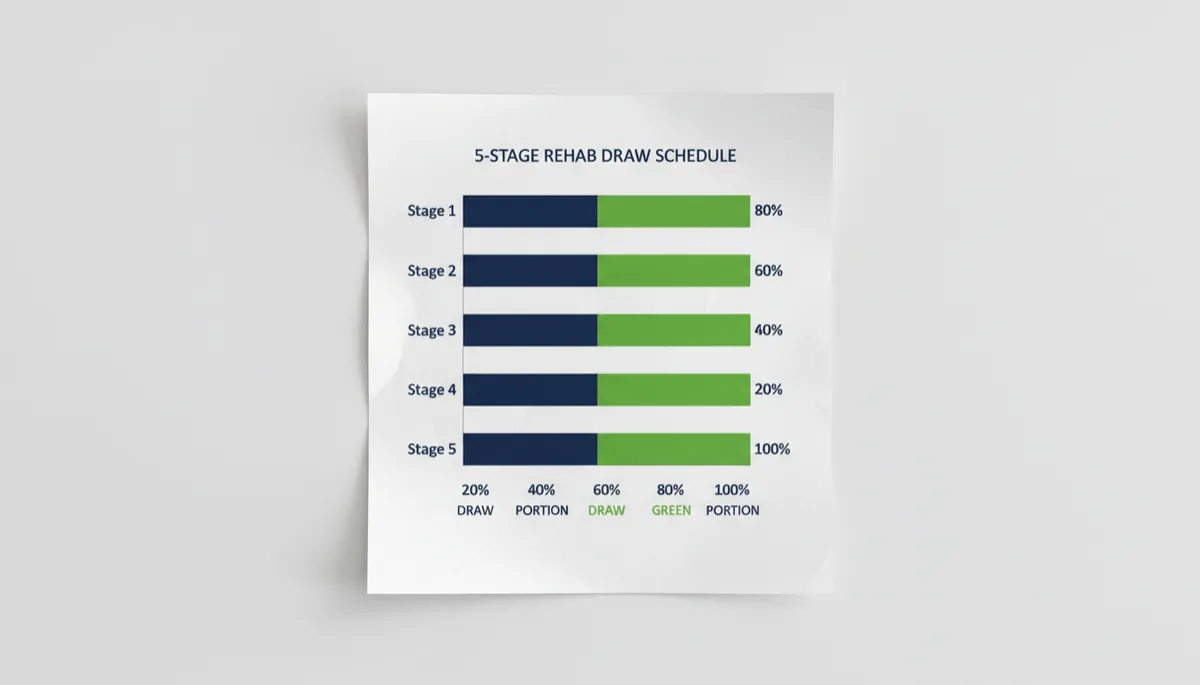
Most Texas rehab loans release funds in 4–5 stages tied to clear construction milestones.
Budgeting Cash Flow Between Draws (So You Don’t Choke the Project)
Here’s the uncomfortable truth: even with “100% rehab financed” on paper, you’ll almost always need some of your own cash to bridge between draws. If you don’t plan for that, you can have a great deal and still run out of oxygen halfway through framing.
When we underwrite a project, we walk investors through three buckets of cash:
- Bucket 1: Upfront rehab cash. What you need to pay deposits, order materials, and get enough work done to request your first draw. On a $60,000 rehab, that might realistically be $10,000–$15,000 of your own money, depending on your contractor terms.
- Bucket 2: Carry costs. Interest, taxes, insurance, and utilities while the rehab is happening. Some lenders will let you roll interest into the loan; others expect monthly payments. Don’t ignore this bucket—it’s where a lot of profit quietly disappears in Texas markets with longer days on market.
- Bucket 3: Contingency. We like 10–15% of the rehab budget set aside, especially on older San Antonio housing stock where surprises behind the walls are basically a pastime.
How to Avoid Getting Stuck Mid‑Rehab in Texas
After watching and helping close 450+ transactions, we see the same avoidable mistakes in Texas rehab projects over and over. Here’s how to sidestep the big ones.
Common Mistake #1: Assuming “100% Rehab” Means “No Cash Needed”
Marketing language can be… optimistic. Even if the lender funds 100% of the rehab budget on paper, it’s still tied to the draw schedule. You’ll front cash, finish work, then get reimbursed. If you’re starting with $3,000 in the bank and hoping the lender wires you money at closing to pay your contractor, that’s a recipe for a stalled project.
Common Mistake #2: No Written Agreement with the Contractor
In San Antonio, a lot of crews are used to getting big deposits. That doesn’t play nicely with a strict draw schedule. We coach our clients to structure contractor payments around the same milestones the lender uses—so you’re not promising your GC money you can’t access yet. Put it all in writing, in plain English both sides understand.
Common Mistake #3: Ignoring Draw Timing and Fees
Some lenders charge a fee for each draw inspection. Some only send inspectors out on certain days. Others need 3–5 business days after inspection to wire funds. None of that is bad—it just needs to be baked into your timeline and budget. If you’ve only got enough cash to float payroll for five days, but your lender’s process takes ten, you can see the issue.
A short checklist before you sign can save months of rehab headaches.
What to Ask a Lender About Draws Before You Sign Anything
Whether you’re talking to a local hard money lender in San Antonio or a regional shop, your goal is the same: no surprises once the rehab starts. Here are the exact questions we’d ask, as investors ourselves:
- 1. How many draws are allowed, and what are the milestones? Three big draws or five smaller ones, and which phases they’re tied to.
- 2. What’s the exact process for requesting a draw? Portal, email, who approves it, and what documentation they expect.
- 3. How long from inspection to money in my account? Get a realistic range and plan your cash flow around the slower end.
- 4. Are there fees for draw inspections? Know the per‑visit cost and whether it’s paid at closing or pulled from draws.
- 5. What happens if the rehab goes over budget? Ask about change orders, flexibility, and what must come from your pocket.
- 6. Do you pay contractors directly or only the borrower? This can calm a nervous GC and keep everyone aligned on payments.
These questions apply across most fix and flip financing options in San Antonio. The more clarity you get up front, the less you’ll be firefighting mid‑rehab.
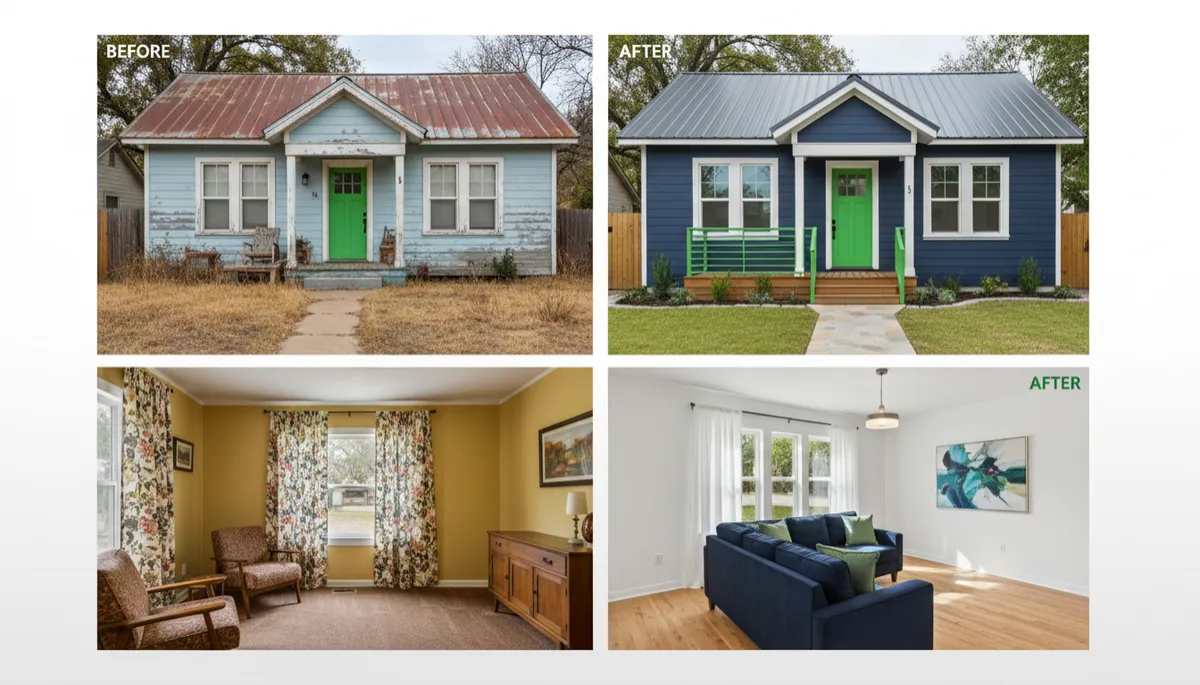
A clear draw plan can be the difference between a stalled project and a clean before‑and‑after success story.
Bringing It All Together (And Your Next Step)
If you take nothing else from this, let it be this: the money side of a flip isn’t just “get a loan and go swing hammers.” Understanding your draw schedule in Texas is just as important as finding the right deal or hiring the right contractor. Draws are the bloodstream of your project. If they’re slow, unclear, or mismatched with your cash, the whole rehab suffers.
We’ve raised millions in private capital and helped investors across San Antonio structure deals that actually work in the real world—not just on a spreadsheet. If you’re looking at a project right now and wondering how the rehab draws, timing, and cash flow would really play out, let’s talk through it before you sign a term sheet you’ll regret halfway through rough‑in.
Here’s what you can do next:
- Book a strategy call with us. We’ll walk your deal, your rehab budget, and your draw plan, and help you see where the gaps are before you’re in too deep.
- Listen to our podcast. We break down real San Antonio case studies—good, bad, and “what were they thinking?”—so you can learn from other people’s draw‑schedule mistakes instead of repeating them.
Whether you’re on your first flip or your fifteenth, getting rehab draws right is one of the highest‑leverage skills you can build. And if you’d like a couple of money nerds in your corner as you do it, that’s literally what we’re here for.