

DSCR Loans for Texas Short-Term Rentals Guide
Real Estate Investing, DSCR Loans, Short-Term Rentals, Texas Financing
DSCR Loans for Short-Term Rentals in Texas: The Investor's Complete Guide
What if your Airbnb could pay for itself — and qualify you for the next one — without a single pay stub or tax return? In this guide, we’ll break down exactly how to use a DSCR loan for short-term rental property in Texas to scale your portfolio like a pro, even if your income is anything but “traditional.”

DSCR Loans 101: What They Are and Why Investors Love Them
We’re Michelle & Vin — “the money couple” out of San Antonio — and we look at deals the way a quantitative trader looks at a chart: numbers first, story second. When we talk about a DSCR loan for short-term rental property Texas investors can use, we’re really talking about one thing: does the property’s cash flow safely cover the debt?
DSCR stands for Debt Service Coverage Ratio. It’s a simple metric lenders use to decide whether your Airbnb, vacation rental, or furnished STR can support its own mortgage without leaning on your personal income. Instead of grilling you for W‑2s, tax returns, or pay stubs, they underwrite the asset, not your job.
The DSCR Formula in Plain English
Here’s the exact formula every lender is running behind the scenes:
DSCR = Monthly Rental Income ÷ Monthly Debt Payment (PITIA)

Where:
P = Principal
I = Interest
T = Taxes
I = Insurance
A = HOA / Association dues (if any)
In Texas, most lenders want to see DSCR of at least 1.0 (income covers the payment), and they usually reward 1.25+ with better rates and terms. Some niche programs dip as low as 0.75 DSCR if you bring a bigger down payment and strong reserves — but we typically aim higher. Think of 1.25+ like a healthy profit margin on a trade: more cushion, less stress.
Real-World Example: San Antonio STR DSCR Calculation
Let’s say you’ve got a San Antonio short-term rental that averages $4,200/month in gross booking revenue (after cleaning fees, before expenses). Your all-in monthly PITIA — principal, interest, taxes (remember, Texas taxes aren’t shy), insurance, and HOA — comes to $2,800/month.
DSCR = $4,200 ÷ $2,800 = 1.50
A DSCR of 1.50 tells the lender your property generates 50% more income than the monthly debt payment. From an underwriter’s perspective, that’s a clean, low-risk trade — and exactly the kind of Airbnb DSCR loan Texas investor deals we love to structure.

Strong documentation of income and expenses turns your STR into a financeable asset.
Why Texas Short-Term Rentals Are Built for DSCR Financing
Here’s the deal: Texas is a short-term rental machine. STRs now capture around 9.5% of statewide lodging revenue, with markets like Austin, Houston, San Antonio, Dallas, and the Gulf Coast doing heavy lifting. AirDNA shows statewide average revenue per active listing around $35K/year, with many top pockets clearing much more.
In San Antonio alone, we see thousands of active listings feeding off:
- Tourism around the River Walk, the Alamo, and missions
- Spurs games, conventions, and military traffic
- Year‑round events and weekend getaways from Houston, Austin, and Dallas
Layer on no state income tax and strong cash‑on‑cash return potential, and you’ve got a perfect playground for DSCR lending. Lenders love predictable, data-backed income streams — exactly what short-term rentals in Texas can provide when you leverage tools like AirDNA and dynamic pricing.
How to Qualify for a DSCR Loan (Even Without W‑2 Income)
Let’s talk about how to qualify for a DSCR loan without W‑2 income. This is where most of our clients lean in, because they’re self-employed, full‑time investors, or just done explaining every line of their tax return to a bank.
Core DSCR Loan Requirements in Texas (2026 Snapshot)
- DSCR ratio for vacation rental property: Most lenders want ≥ 1.0 DSCR; we target 1.25+ for better terms. Some niche programs allow 0.75–0.99 with larger down payments and stronger reserves.
- Credit score: Minimums typically fall in the 620–680 range. To unlock the best pricing and higher leverage, we like to see 700–740+.
- Down payment / LTV: Plan on 20–25% down (75–80% LTV). Strong files can sometimes push to 80–85% LTV on purchases; cash‑out refis usually cap around 75–80%.
- Reserves: Expect 3–6 months of PITIA in liquid reserves; riskier profiles or sub‑1.0 DSCR deals may need 6–12 months.
- Property types: Single‑family, condos, and 2–4 units are common. Many of our lenders specifically allow short-term rentals and underwrite them with STR income data.
- No income verification: This is true short-term rental financing no income verification Texas investors can actually use. No W‑2s, no tax returns, no personal DTI — lenders are focused on the deal’s cash flow.
Using STR Data (Like AirDNA) to Underwrite Income
For an Airbnb DSCR loan Texas investor scenario, lenders don’t just guess. They’ll usually look at:
- Actual STR history (Airbnb/VRBO statements, 12–24 months if available), and/or
- Market‑based projections using tools like AirDNA, plus appraiser’s market rent schedule
We work with lenders who actually understand short-term rentals — they’re comfortable using realistic occupancy rates and ADRs rather than treating your STR like a boring long‑term rental. That’s a huge difference in DSCR and approval odds.
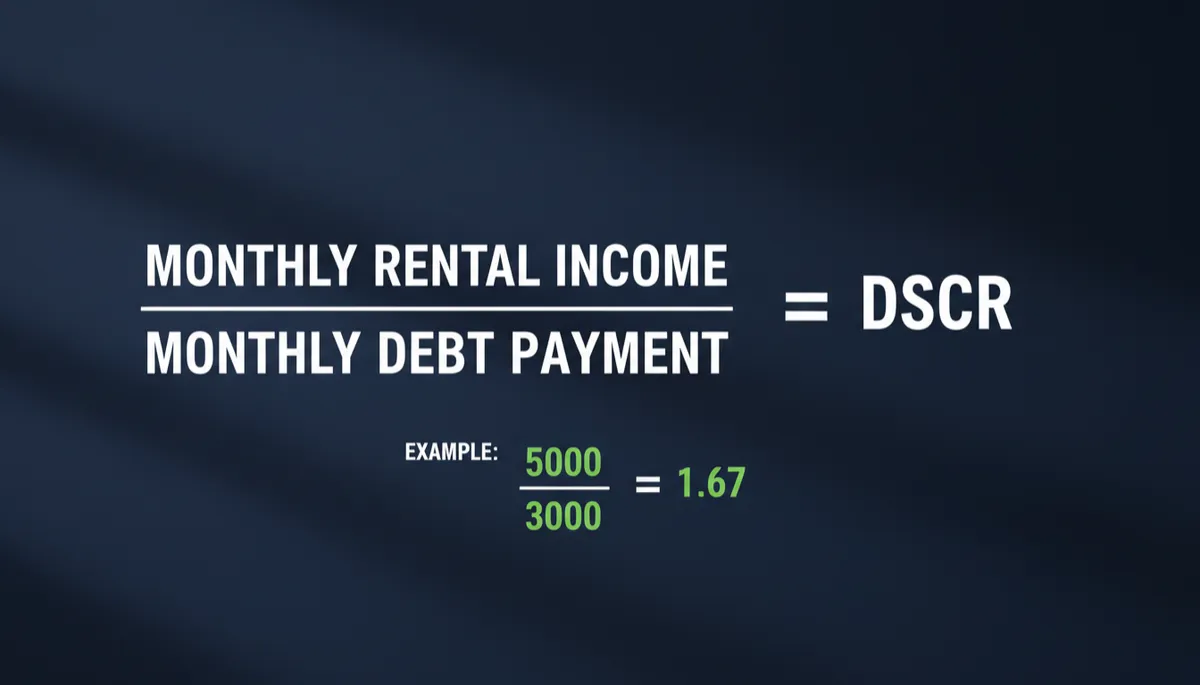
A clear DSCR calculation is your underwriting cheat sheet before you ever apply.
The Numbers Breakdown: A Real San Antonio DSCR Case Study
Let’s walk through a deal that looks a lot like ones we’ve actually closed. Imagine a 3‑bed, 2‑bath property on the northwest side of San Antonio — close to major employers, 20 minutes to the River Walk, easy access to tourist and business traffic.
| Metric | Value |
|---|---|
| Purchase Price | $285,000 |
| Down Payment (25%) | $71,250 |
| Loan Amount | $213,750 |
| Estimated Monthly PITIA | ~$2,100 |
| STR Market Rent (AirDNA) | ~$3,800/month |
Now we run the DSCR:
DSCR = $3,800 ÷ $2,100 ≈ 1.81
A DSCR of 1.81 is a slam dunk. From a lender’s risk model, the property’s cash flow easily covers the debt service with plenty of cushion. From an investor’s perspective, this is like entering a trade with asymmetric upside: strong positive cash flow, multiple exit options, and leverage that’s working for you, not against you.
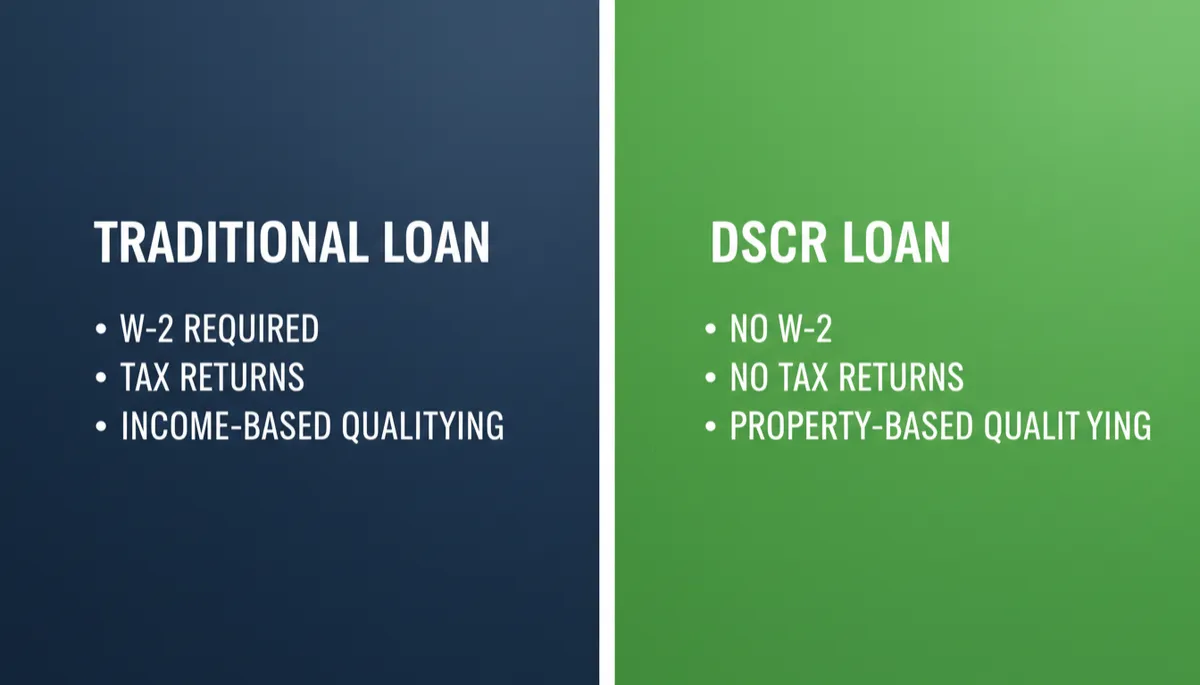
DSCR loans shift the focus from your paycheck to your property’s performance.
Common DSCR + STR Mistakes We See Investors Make
- Using long‑term rental comps for an STR deal. If you underwrite a San Antonio Airbnb using 12‑month lease rents, you’ll probably kill deals that actually work. Lenders that understand STRs will lean on STR data — use it.
- Ignoring Texas‑level expenses. High property taxes (often 1.6–2.7% of value), flood insurance on the coast, and HOA dues all increase PITIA and drag down DSCR. If you don’t price them in, the lender will — and it might be too late.
- Thin or no reserves. Let’s be honest: running a short-term rental is more volatile than a 12‑month lease. Lenders know that. Coming in with minimal reserves is like trading without a stop‑loss — one bad month and you’re in trouble.
- Choosing the wrong property type or market. Not every Texas town is STR‑friendly. Regulations in Austin, Dallas, and some Hill Country spots can be tight. You want areas where demand, rules, and numbers all line up.
Putting It All Together: Strategy, Not Just a Loan Product
A DSCR loan isn’t magic — it’s a tool. Used well, it lets you stack assets based on performance, not pay stubs. Used poorly, it’s just more leverage in the wrong direction. Our job, as your “money couple” in San Antonio, is to help you structure DSCR loan cash flow requirements short-term rental deals that actually hold up in the real world and under lender scrutiny.
Think like a quantitative trader: define your entry criteria (target DSCR, minimum cash‑on‑cash, acceptable volatility in bookings), your risk controls (reserves, conservative underwriting), and your exit options (refi, sell, convert to mid‑term or long‑term). Then use DSCR loans as the leverage engine behind that strategy.

When the numbers work and the structure is right, DSCR loans scale portfolios fast.
Ready to Use DSCR Loans to Scale Your Texas STR Portfolio?
If you’re staring at great Texas STR opportunities but traditional lenders keep telling you “no” because your W‑2 doesn’t fit their box, it’s time to switch playbooks. You don’t need to twist your life to match a bank’s checklist — you need a lender who understands short-term rental financing no income verification Texas investors can actually qualify for.
We’ve helped investors across San Antonio, Austin, Houston, Dallas, the Hill Country, and the Gulf Coast close DSCR loan for short-term rental property Texas deals without a W‑2 in sight — using clean underwriting, realistic STR data, and smart risk management. If you’re ready to stop leaving deals on the table and start stacking properties that pay for themselves, we’d love to talk.